Communities › Fremont

Fremont Community Guide

Living in Fremont: Compare Neighborhoods and Understand the Tradeoffs.

Compare neighborhood settings, housing types, ownership costs, schools, daily access, and property-level market context before choosing an address.

Ravi’s data-driven advisory approach connects local context, market evidence, property questions, and your priorities.

Explore Fremont With RaviCompare my commute

NEIGHBORHOOD MAP

See Where the Neighborhoods and Connections Are

Select an area to orient yourself, then open its detailed guide. The road map and selected stations help you investigate access from the actual property.

Read area guide →
Read area guide →
Read area guide →
1 Community / areaB BART stationA ACE station

Loading the road map. The guide links remain available below.

Pins identify approximate area or station reference locations, not neighborhood, city, school, HOA, or service boundaries. No route is drawn or travel time implied between pins. Use the operator’s current entrance and service information. The map isn’t a live traffic feed.

BART stations · BART trip planning · ACE schedules · 511 traffic · VTA ACE connections

Neighborhood decision guide

Explore Fremont by neighborhood, not just by city

Neighborhood-level decisions for buyers balancing South Bay employment, rail connections, and home requirements. These are research starting points, not rankings. Housing inventory and market conditions change, and neighborhood boundaries may not align with school district boundaries.

Mission San Jose

An established residential area near the Mission Peak foothills with varied housing ages and lot characteristics.

Buyer checks: Compare address-specific school information, property condition, slope or hazard disclosures where applicable, and actual prices from similar closed sales.

Read the detailed guide →

Irvington

A mixed residential and commercial area with different detached and attached housing options.

Buyer checks: Check street-level walkability, driving access, housing age, and specific school assignment rather than relying on a neighborhood reputation.

Read the detailed guide →

Warm Springs

A South Fremont area where buyers may examine rail accessibility and varied development styles.

Buyer checks: Evaluate BART access, exact employer location, potential HOA costs, and whether the specific property is compatible with space requirements.

Read the detailed guide →

Centerville

A district with established homes, commercial corridors, and varied neighborhood character.

Buyer checks: Check street and building condition, commute paths, nearby services, and individual-property differences.

Read the detailed guide →

Ardenwood

A northwestern Fremont area that may be relevant when comparing access to Peninsula routes and family housing needs.

Buyer checks: Inspect bridge or road commute reliability, property type and lot, and school enrollment details by actual address.

Read the detailed guide →

Niles

A historic district character distinct from other Fremont submarkets, with older properties and local amenities.

Buyer checks: Review historic-home condition, renovation restrictions if applicable, access to rail or road routes, and ownership costs.

Read the detailed guide →

Housing character

Four ways to compare the housing stock.

Use these as research lenses. The exact home and documents determine what applies.

Established detached homes

Compare layout, lot utility, permits, and the condition of major systems.

Attached and condominium homes

Read association coverage, reserves, insurance, parking rights, and assessments.

Planned developments

Check the actual development, tax bill, approvals, and surrounding project status.

Foothill and larger-lot properties

Review usable land, drainage, access, hazard disclosures, and insurance for the parcel.

Your priorities

What should the home make easier?

South Bay workdays

Compare the exact Santa Clara or San Jose office journey from different Fremont neighborhoods.

Rail as part of the routine

Test access to an operating BART or ACE station, the timetable, transfers, and the final leg.

Character and home usability

Compare historic-district settings with the layout, condition, parking, and space you actually need.

Ownership-cost watchlist

Look beyond the purchase price.

Taxes and assessmentsRead the actual parcel’s bill
Association obligationsCheck the specific documents
Condition and maintenancePrice the systems and planned work
Insurance and servicesVerify for the exact address
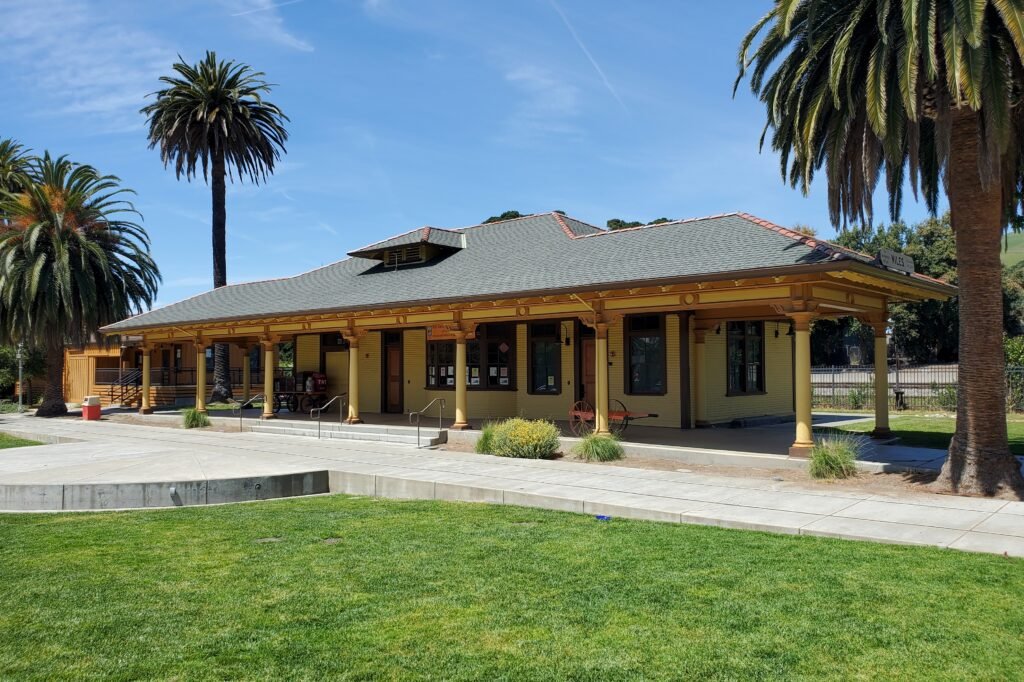
Niles Depot, Fremont · April 2024
Niles Depot, Fremont · April 2024 · Pi.1415926535 / Wikimedia Commons, CC BY-SA 4.0. Scaled and displayed cropped.

Fremont in context

Get a feel for the setting.

The Niles Depot is one local reference point within Fremont’s historic district landscape. A photograph or district name doesn’t establish today’s condition, station service, or the surroundings of a candidate home. Explore the individual guides, then visit the actual street.

01

Neighborhood fit

Start with your everyday needs.

Commute reality

Test routes to the exact Santa Clara or San Jose workplace and consider Fremont BART access if San Francisco commuting is part of the decision.

Home value

Mission San Jose, Irvington, Warm Springs, and Centerville have different housing mixes. Compare recent closed transactions and total ownership costs.

Schools and programs

Check property-specific school assignment with Fremont Unified School District. Never assume a neighborhood or postal code guarantees placement.

02

Commute and connection

Test the complete workday.

South Bay accessibility varies significantly across Fremont. Test the route from the actual candidate home to the job site in Santa Clara or San Jose. For San Francisco, use relevant BART stations and assess driving or cycling access plus the full transit journey.

Commute verification worksheet

  1. Use the precise workplace entrance and the home address, not city-center locations.
  2. Measure peak-hour outbound and return journeys on the days you'll commute.
  3. Compare driving with any practical BART, ACE, or local transit itinerary, including transfers and station access.
  4. Account for parking, fares, reliability, and how often you make the trip.
03

Property and ownership

Compare the home and the full budget.

Recent sales

Compare closed sales with similar property types, floor plans, square footage, lot characteristics, condition, and timing. Don't infer a present-day median from old information.

Ownership costs

Check property taxes, insurance, HOA dues, likely maintenance, improvement needs, and any special assessments, not just the purchase price.

Trade-off test

Compare the home against commuting time, space needs, school research, walkability, and the ability to remain in the home as needs evolve.

Use the Home Comparison Scorecard · Evaluate your buyer timing

04

Schools and daily access

Verify the address. Test the routine.

Fremont Unified School District assignments, programs, and enrollment requirements should be confirmed using the exact property address and current district information. No neighborhood designation guarantees a particular school.

A sound comparison considers program fit, special education and other services when relevant, distance, and the district's current enrollment rules. Ratings alone do not establish suitability or eligibility.

Before making an offer: Contact the responsible school district and document the exact address-specific response. Verify again if an enrollment or boundary policy changes.

05

Market context

Fremont contains distinct property markets.

Use the dated citywide Altos asking-market report for context, then compare relevant verified closed sales and current alternatives for the property. No neighborhood median or invented sale is presented here.

FAQ

Fremont community guide FAQ

Questions buyers often ask

How should I compare Fremont neighborhoods?

Start with the housing type, the exact home, ownership costs, and your daily routes. Mission San Jose, Irvington, Warm Springs, Centerville, Ardenwood, and Niles are search starting points, not uniform property or school boundaries.

Which Fremont BART stations should I research?

Fremont and Warm Springs / South Fremont are operating BART stations. Compare the actual station entrance, access route, schedule, parking, and final leg to work for the property.

Is Fremont–Centerville the same as Fremont BART?

No. Fremont–Centerville is a separate rail station. Verify the operator, service, and timetable rather than treating the two stations as interchangeable.

Does a neighborhood label guarantee a school?

No. Verify assignment, programs, and current enrollment requirements with Fremont Unified using the exact property address.

Are the market statistics neighborhood sale prices?

The linked Fremont market report is dated citywide Altos asking-market context. A property decision needs relevant verified closed sales and property-specific adjustments.

How Fremont fits into a wider East Bay search

A South Bay employee might compare Fremont with Pleasanton or Dublin, especially if one household member works in San Francisco. Check both commutes, office frequency, the exact neighborhood, and how the available housing matches the budget.

Compare your commute, schools, and home requirements

Danville · San Ramon · Pleasanton · Dublin · Livermore · Walnut Creek · Fremont

Research guide updated November 2026. No live listing feed, unverified school rating, or current commute-time estimate is presented here. Verify all market, travel, boundary, and property information before relying on it.

Niles vs. Warm Springs: compare two Fremont searches

Explore this resource →

Home Comparison Scorecard

Explore this resource →

Where Should I Live?

Explore this resource →

Your Fremont decision

Look beyond the neighborhood name.

Compare the home, site, ownership costs, and journeys that will shape your week.

Talk through your options

MAKE THE WORKWEEK PART OF YOUR HOME SEARCH

Could Fremont fit your San Francisco or Silicon Valley workweek?

Compare your actual office locations, required office days, housing needs, and ownership costs before narrowing a neighborhood. Start with the location comparison, then verify the route and property details.